GS3 Water Solutions
Water treatment that fits your home.
From reducing hard-water scale to improving drinking water, learn what different systems do and how to select the right combination for your household.
The fundamentals
Understand the problem before choosing the equipment.
Water can have several different issues at once. A softener addresses hardness; a carbon filter can improve certain taste-and-odor issues; a reverse-osmosis system treats drinking water at a dedicated faucet.
Water softeners
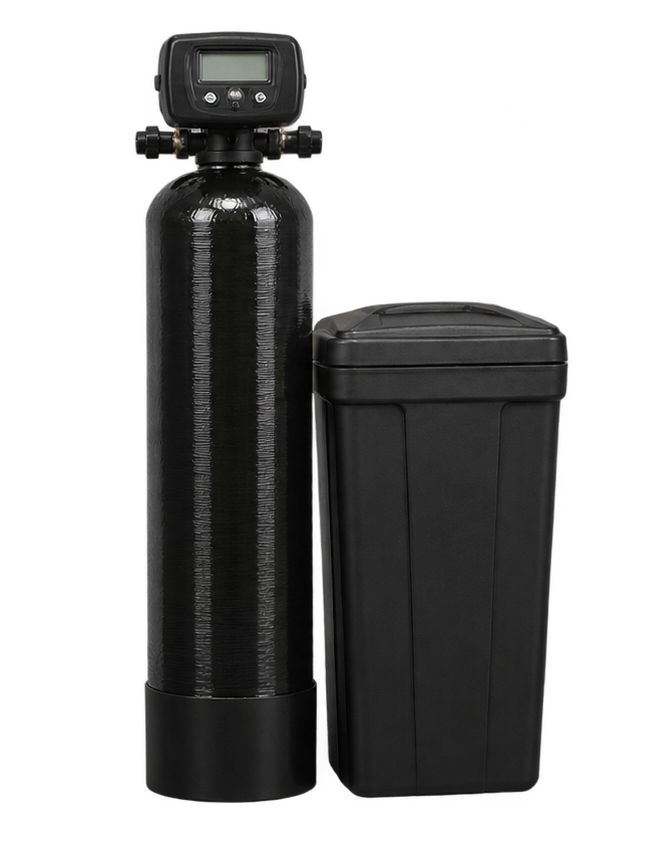
Hard water contains dissolved calcium and magnesium. An ion-exchange softener reduces those hardness minerals, helping address mineral buildup, soap scum, laundry feel, and spotting on fixtures or glass.
- Automatic control valve manages regeneration cycles.
- Resin tank treats the household's incoming water.
- Separate brine tank stores salt or an appropriate regenerant.
- Proper sizing depends on hardness, water usage, and household size.
What it doesn't do: A standard softener is not a general-purpose chlorine, PFAS, pathogen or drinking-water contaminant filter.
Ask About a SoftenerWhole-home carbon filtration
Activated carbon provides surface area that adsorbs certain substances as water passes through. Depending on the media, contact time, and certification, carbon can reduce chlorine-related taste and odor and some other targeted compounds.
- Whole-home filter tanks can treat water at the point it enters the house.
- Automatic backwashing valve options help rinse accumulated particles in suitable systems.
- Media type and replacement schedule matter.
- Specific reduction claims must match the actual model and test data.
What it doesn't do: Standard carbon is not a replacement for a water softener; it generally does not remove dissolved hardness minerals.
Ask About Carbon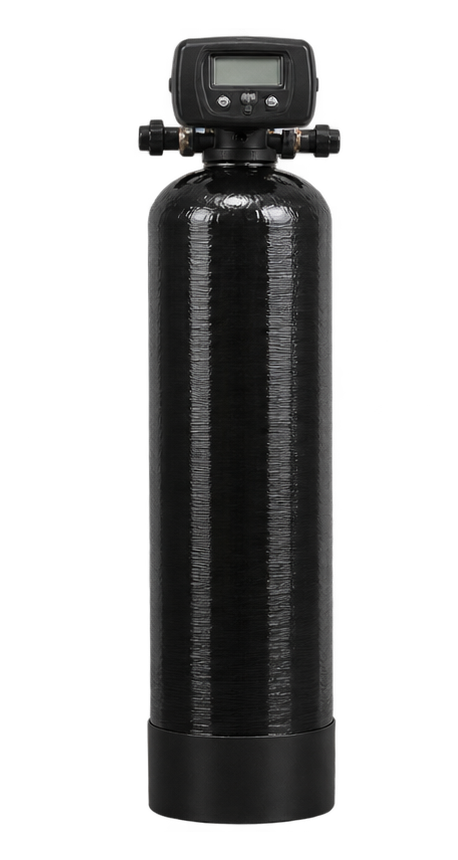
4-stage and 5-stage reverse osmosis
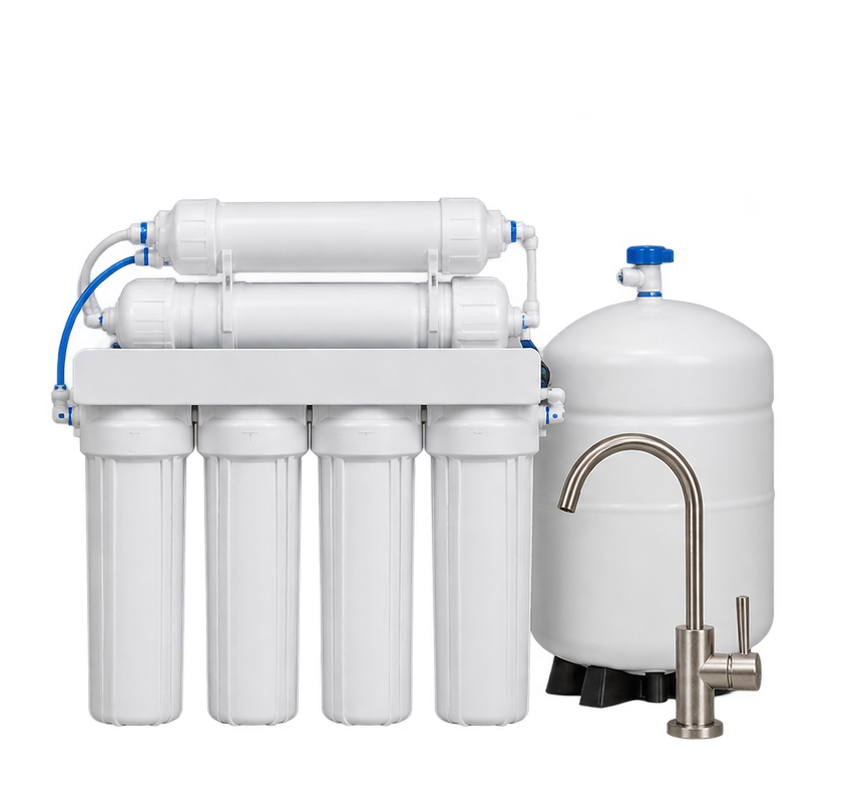
Reverse osmosis uses a semipermeable membrane and prefilters to reduce many dissolved substances in drinking water. A typical under-sink system delivers treated water through its own faucet.
- Prefilters help reduce sediment and protect the membrane.
- Carbon stages commonly improve chlorine taste and odor.
- The RO membrane reduces many dissolved substances, depending on the product.
- Additional polishing filters can improve final taste.
What it doesn't do: Not every RO unit is certified for every contaminant, and membrane systems require maintenance and generate reject water.
Ask About ROScale-control / descaler options
Salt-free scale-control systems aim to reduce scale formation under suitable conditions. They do not necessarily remove calcium or magnesium or produce the same soft-water feel as an ion-exchange softener.
Shower, laundry & point-of-use filters
Inline filters can address specific applications. Selection depends on the connection, flow rate, pressure, filter media and the particular water concern; they are not substitutes for whole-home treatment when that is needed.
Common water concerns
What does each system reduce?
These are general treatment roles, not guaranteed performance promises for any individual product.
| Water concern | Common treatment approach | What to check |
|---|---|---|
| Calcium & magnesium hardness | Ion-exchange softener | Hardness level (grains per gallon), softener capacity. |
| Chlorine taste or odor | Activated carbon | Specific NSF/ANSI 42 claim, flow rate and media. |
| Certain lead and other dissolved substances | Appropriately certified RO or specialized filter | Claims for the specific contaminant, e.g. NSF/ANSI 53 or 58. |
| Sediment / particles | Sediment filter or suitable backwashing media | Particle rating, load, and replacement/flush schedule. |
| Scale formation without salt | Descaler / scale-control system | Applicable scale-reduction performance data; not equivalent to softening. |
| Well-water iron, sulfur, or microbes | Specialized water treatment after testing | Lab results, appropriate technology and ongoing maintenance. |
No single treatment system removes everything. Contaminant claims vary by model and certification, and public water reports do not replace testing of a private well or a home's tap water.
Common questions
Water treatment FAQs
Does a water softener make water safer to drink?
A standard water softener is designed for hardness minerals—not broad contaminant removal. A drinking-water filter or RO system may address other concerns, depending on the contaminants and device certification.
Is a carbon filter the same as a softener?
No. Carbon is commonly used to address chlorine-related taste and odor; ion-exchange softeners reduce dissolved calcium and magnesium.
Should I get a 4-stage or 5-stage RO?
Stage count alone is not a quality rating. The right system depends on membrane performance, required contaminant claims, flow, available space, maintenance and your water.
Do you have to test my water in person?
Not for an initial informational review. We can start with your water source and publicly available data. If an accurate measurement of the water at your home is important, an appropriate at-home test or certified laboratory analysis may be recommended.
Do you offer equipment and installation?
GS3 Solutions helps select and supply water treatment equipment and coordinates the project. When installation services are needed, qualified service providers can be arranged as appropriate.
Not sure what your water needs?
Start with a free informational water report.